OpenAI’s Movable Speaker Could Reportedly Work As An AI Companion in Homes
In Focus
- OpenAI’s hardware device will reportedly be a mobile, screenless smart speaker
- The smart speaker will rely on ChatGPT Voice Mode for communication
- OpenAI envisions a device that can anticipate user needs and retrieve information proactively
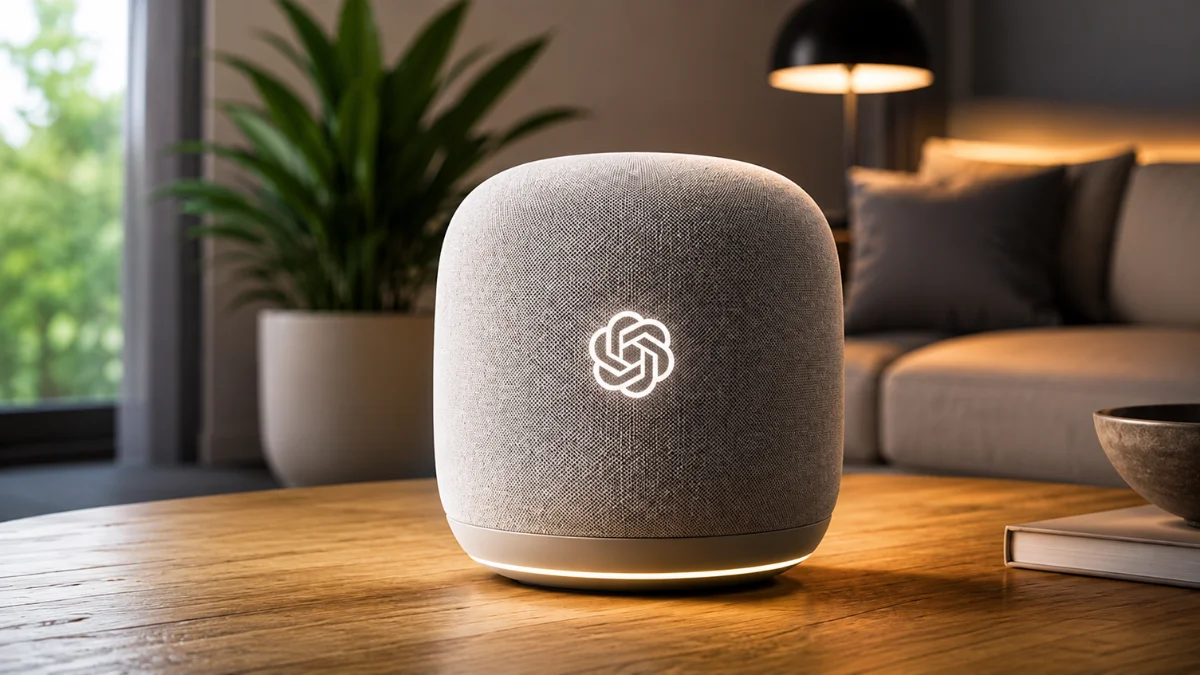
OpenAI’s first hardware device will reportedly be a mobile, screen-free smart speaker. The new device is designed to be a new type of home computer and is expected to serve as a companion device in homes. OpenAI’s AI speaker will reportedly control smart appliances, respond to questions, and play media while using some of ChatGPT’s capabilities.
What Makes OpenAI’s ChatGPT Smart Speaker Unique?
Sources familiar to the hardware device project said its personality and ability to connect on a human-like level will make the new device unique. The AI companion device features mechanical elements that work independently to give a sense of life, rather than an object that simply responds to commands.
The device will reportedly draw personal information like emails to understand its owner better. The smart speaker will rely on ChatGPT Voice Mode for communication. OpenAI recently rolled out GPT-Live AI models to power ChatGPT Voice Mode. The new models are designed to make ChatGPT conversations feel more natural by talking and listening at the same time.
Internally, OpenAI describes the project as a new type of computer built specifically for the AI era. However, a report by Bloomberg shows that OpenAI’s goal is to make the smart speaker a physical manifestation of ChatGPT.
The company envisions a device that feels like a real companion, one that can anticipate user needs and retrieve information proactively while working as an expert for the owner. Even so, OpenAI’s plan for the device could change during the development and legal process.
What Does the Smart Speaker Mean for OpenAI?
OpenAI’s AI companion device represents a major milestone for the ChatGPT-maker. With the company planning to list publicly in the coming months, the new device could position it as a strong competitor for tech companies like Apple, Google, and Amazon, which already offer consumer products.
Last week, Apple filed a lawsuit against OpenAI over trade secret theft. However, OpenAI holds that its upcoming screenless AI speaker differs significantly from any product that Apple has released in the market and does not violate any trade secrets owned by the iPhone maker.
Even so, the success of OpenAI’s new hardware device will rely heavily on the company’s ability to introduce a novel approach to the market. Currently, the AI developer is looking to do this with an AI speaker whose technology gets more personalized as it understands its owner.
What Next for OpenAI?
As OpenAI expands beyond software, its first consumer hardware product could test whether users are ready for AI companions that play a more active role in everyday life. If successful, the screen-free device could reshape expectations for smart home technology and intensify competition with established consumer electronics companies.