OpenAI Brings Human-Like Interactions to ChatGPT Voice With New GPT-Live Models
In Focus
- OpenAI introduced two voice models, GPT-Live-1 and GPT-Live-1-mini
- GPT-Live-1 is the default model powering ChatGPT Voice for paid subscribers
- GPT-Live is the largest update that OpenAI has implemented on ChatGPT Voice
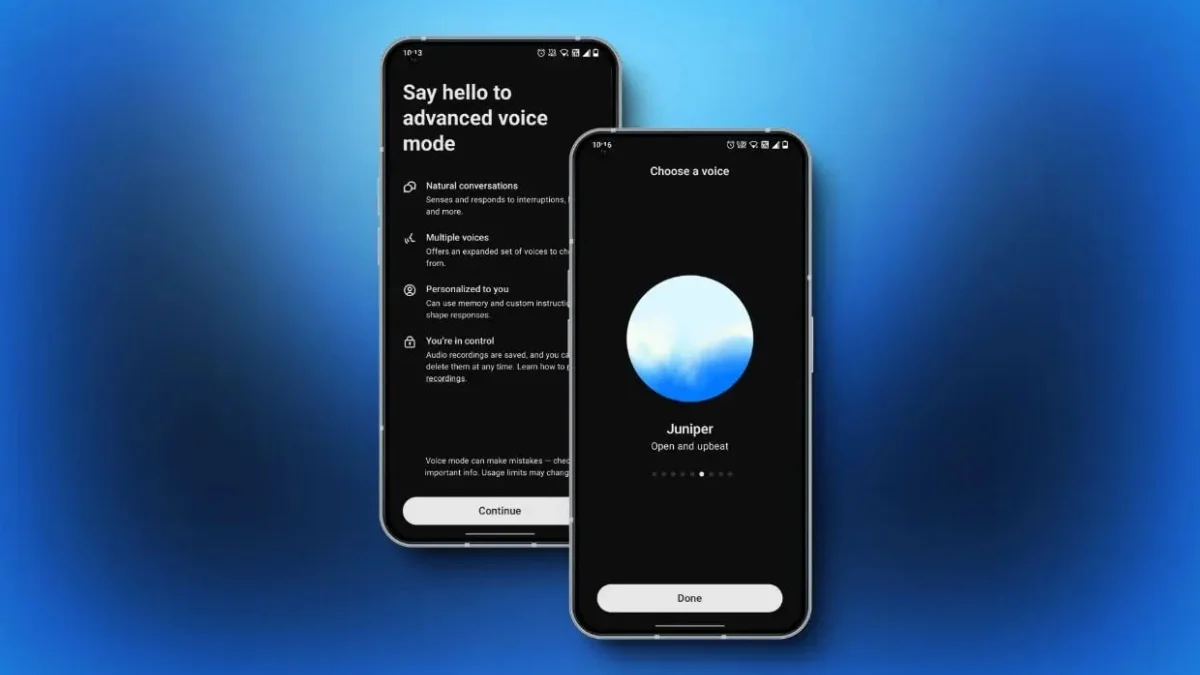
OpenAI has released GPT-Live, a new generation of voice models designed to make ChatGPT conversations feel more natural. The voice models represent the largest update that OpenAI has implemented to ChatGPT Voice. The models make user interactions with ChatGPT more natural, fluid, and faster across the web, Android, and iOS platforms.
Is GPT-Live Available for Free?
OpenAI introduced two ChatGPT Voice models, GPT-Live-1-mini and GPT-Live-1. GPT-Live-1-mini is the default model for free-tier ChatGPT users. On the other hand, GPT-Live-1 will be the default model powering ChatGPT Voice for Go, Plus, and Pro users.
The voice models support real-time conversations on ChatGPT by allowing the AI assistant to listen and speak at the same time. GPT-Live delivers real-time, two-way voice conversations that feel like talking with another person rather than interacting with a traditional voice assistant.
Conventional voice assistants wait for users to finish speaking before responding. This is not the case with OpenAI’s GPT-Live models. The new models support natural interruptions, pauses, topic changes, and follow-up questions, keeping conversations smooth and uninterrupted.
“GPT‑Live is built on a full-duplex architecture, meaning it can listen and speak at the same time. During conversations, GPT‑Live can show it’s paying attention with phrases like “mhmm” or “yeah”, engage in quick back-and-forth, or just stay quiet when you need a moment to think,” OpenAI noted in a statement.
How Does GPT-Live Work?
According to OpenAI, GPT-Live handles voice conversations separately from advanced processing tasks. When users submit requests that involve capabilities like web search, deep reasoning, or agentic workflows, the models route the task to specialized AI models while keeping voice conversations interrupted.
Currently, GPT-5.5 is handling the advanced tasks. However, OpenAI plans to later replace it with a newer frontier AI model. With the GPT-Live models, OpenAI is shifting from its previous voice architecture which relied on separate speech recognition, language processing, and speech synthesis components working in sequence.
The move also replaces the turn-based Advanced Voice Mode, eliminating the need for users to wait until they finish speaking before receiving a response. According to OpenAI, both GPT-Live-1 and GPT-Live-1-mini performed better than Advanced Voice Mode in overall conversation quality.
The company has already rolled out the new models to ChatGPT users globally. OpenAI introduced GPT-Live as it prepares to launch its next frontier model, GPT-5.6 Sol.
What Does GPT-Live Mean for OpenAI’s AI Leadership?
GPT-Live strengthens OpenAI’s leadership in conversational AI by pushing ChatGPT toward more human-like interactions. The models’ ability to support simultaneous listening and speaking and seamlessly pass complex tasks to advanced AI models while delivering faster, uninterrupted conversations raises the standards in voice AI.
By replacing its older voice architecture with a more capable system, OpenAI is reinforcing its competitive edge and positioning ChatGPT as one of the most advanced AI assistants available today.