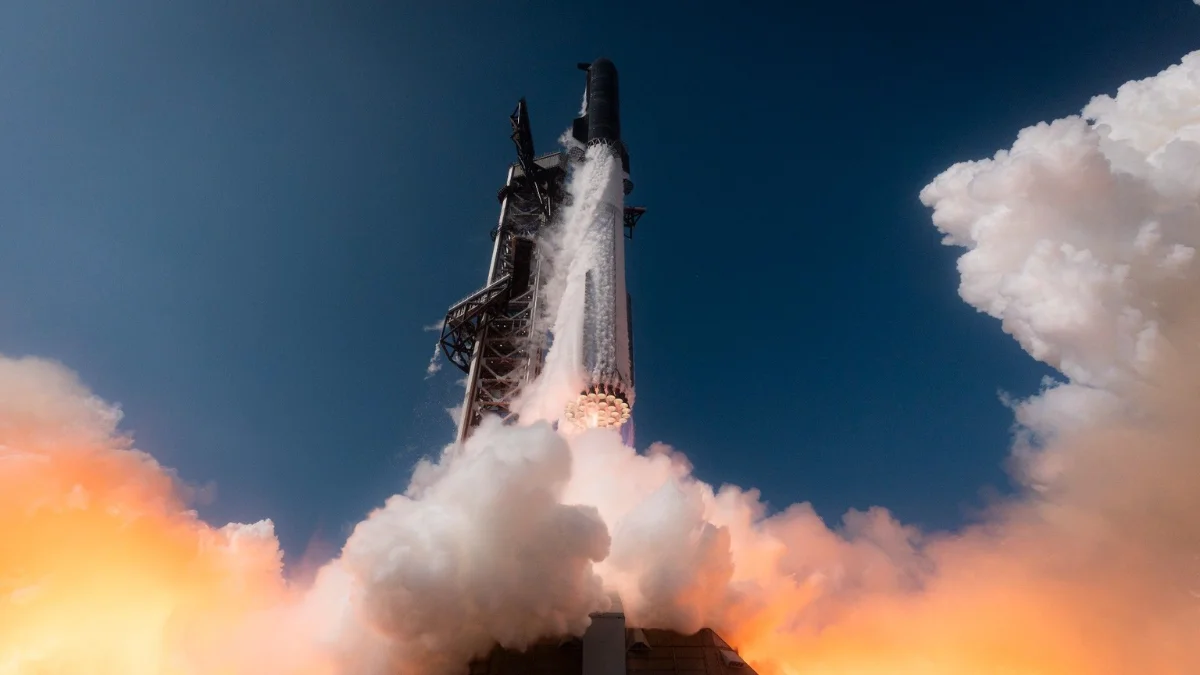
SpaceX Starship Test Flight Cleared After FAA Closes Booster Probe
In Focus
- FAA clears Starship test flight preparations after reviewing the May booster malfunction
- Starship next test flight will launch from SpaceX’s Starbase facility in Texas
- Starship 13th test flight will deploy actual Starlink V3 satellites for the first time
- SpaceX changed procedures after engine alarm settings contributed to Super Heavy booster failure
SpaceX has moved closer to its next Starship mission after the US Federal Aviation Administration closed its review into a booster malfunction during the rocket’s May 22 test. The decision clears a key regulatory hurdle for the next Starship test flight, as SpaceX prepares another launch from its Starbase facility in Texas.
FAA Closes Review Into Booster Malfunction
The FAA closed its review on Monday into the malfunction involving Starship’s Super Heavy booster during the May 22 flight. That mission marked the 12th Starship test since 2023 and used a newer version of the rocket expected to support SpaceX’s launch operations, satellite plans, and efforts to carry astronauts to the Moon.
During the test, the Starship upper stage accelerated into space on a non-orbital trajectory before ending its flight in the Indian Ocean. The Super Heavy booster, however, failed while attempting a controlled soft landing in the Gulf of Mexico.
“Erroneous engine alarm system settings also contributed to the return failure, and Super Heavy plunged into the Gulf of Mexico at high speed.” the FAA said.
SpaceX has since made procedural changes designed to address the interconnected causes identified during the review. Closing the investigation allows the company to proceed with preparations for another test as it continues evaluating Starship’s flight and recovery systems.
Next Mission Targets Satellite Deployment Test
SpaceX is preparing to conduct the SpaceX Starship launch from its Starbase facility in Texas on Thursday. The mission is expected to follow a profile similar to the previous test, with the Super Heavy booster targeting the Gulf of Mexico and the Starship spacecraft heading toward the Indian Ocean.
The planned flight will last roughly one hour and take Starship through suborbital space. SpaceX will again test the performance of both stages while gathering flight data from the booster return and spacecraft trajectory.
A major change for the upcoming mission is the planned deployment of actual Starlink V3 satellites. Previous tests focused on validating orbital positioning and deployment mechanisms rather than releasing operational satellites.
The satellite deployment test represents an important technical objective for SpaceX as it works toward using Starship as a launch vehicle for the next generation of its Starlink network. SpaceX plans to begin rolling out Starlink V3 satellites aboard launch vehicles by the end of 2026.
Starship Program Carries Wider Business Importance
Starship has become central to several of SpaceX’s long-term programs. The rocket is expected to support the company’s launch business, satellite ambitions, and lunar mission plans. SpaceX has spent more than $15 billion on Starship development to date, while the program has fallen years behind Elon Musk’s initially projected timelines.
The upcoming mission will test whether procedural changes introduced after the previous booster malfunction can support another full flight attempt. It will also provide SpaceX with operational data on satellite deployment using the Starship platform.
For the commercial space industry, the mission carries significance beyond another rocket test. Starship’s ability to deploy Starlink V3 satellites could influence SpaceX’s satellite launch capacity and future network expansion. The FAA’s closure of the booster review now gives SpaceX the regulatory clearance needed to continue testing a launch system tied to its broader space and satellite strategy.