
In Focus
The investigation will focus on the company’s self-certification process.
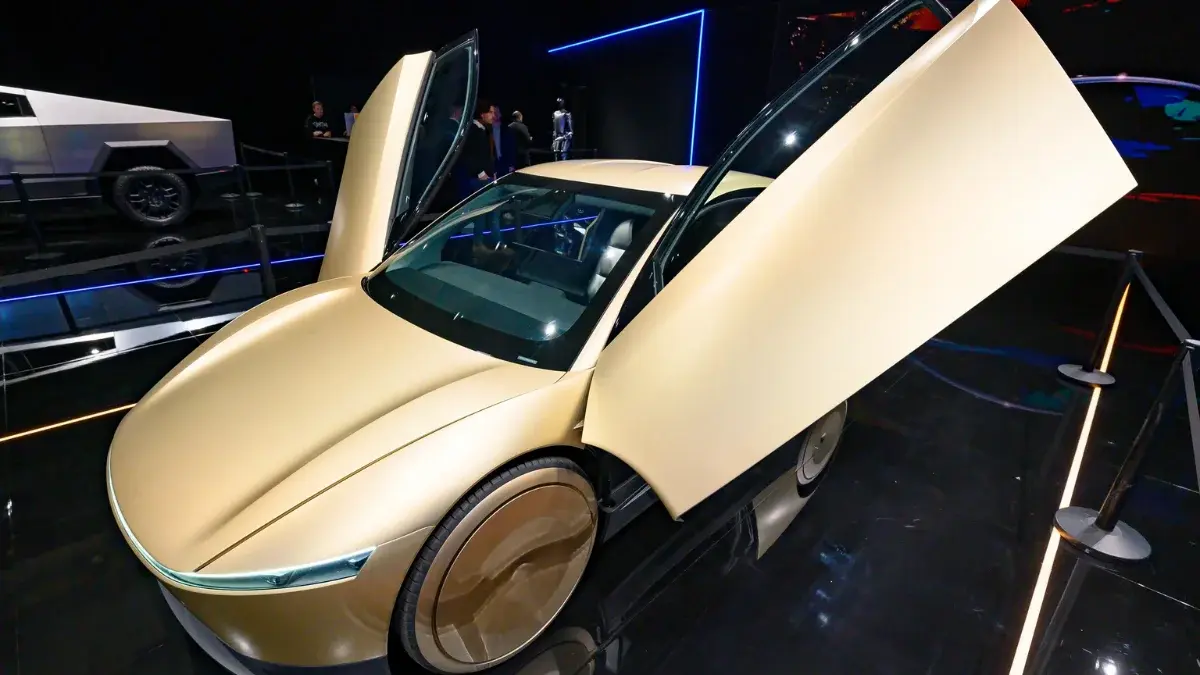
Tesla launched the Cybercab on selected public roads in Austin, Texas, on September 3.
NHTSA subjected Zoox to a similar audit before granting an exemption for its vehicles in 2025.
The National Highway Traffic Safety Administration (NHTSA) has launched an investigation into Tesla’s Cybercab. The U.S. automotive safety regulator opened the probe a day after Tesla launched the Cybercab in Austin, Texas. Tesla’s head of AI Ashok Elluswamy, said the Cybercab was available to the public. However, the company did not state when it will start charging for robotaxi services.
What is the Focus of NHTSA’s Cybercab Probe?
NHTSA’s Cybercab audit focuses on how Tesla certified the new robotaxi for use on public roads despite its lack of conventional steering and braking controls. During the probe, regulators will examine the process and the technical data used by the Elon Musk-led company to certify the Cybercab.
The robotaxi investigation will also consider the extent to which Tesla’s certification relied on how certain Federal Motor Vehicle Safety Standards (FMVSS) do not apply to the robotaxi. Several existing U.S. vehicle safety standards were written around vehicles with conventional driver controls, including steering and braking controls.
However, the Transportation Department has recently proposed changes to federal safety standards to accommodate vehicles designed to operate without conventional manual controls. According to the NHTSA, Tesla informed the agency that it had self-certified the Cybercab’s compliance with all Federal Motor Vehicle Safety Standards.
Automakers have traditionally been responsible for self-certifying that their vehicles comply with FMVSS requirements. NHTSA’s probe on Tesla will target approximately 1,000 Cybercabs.
NHTSA Subjected Zoox to a Similar Probe
This is not the first time an autonomous vehicle company has faced NHTSA’s inquiry after self-certifying its robotaxi. Zoox, the Amazon-owned startup, was subjected to a similar probe after it self-certified its cube-like autonomous vehicles in 2022. Like the Cybercab, Zoox’s robotaxis operate without conventional controls such as pedals and steering wheels.
Through a special order, NHTSA required Zoox to submit additional information about its self-driving vehicles. The regulator also launched a probe similar to Tesla’s in 2023. Unlike Tesla, Zoox was testing its robotaxi heavily during the probe. The investigation added a regulatory hurdle to Zoox’s path toward commercializing its robotaxi service.
In August 2025, NHTSA granted Zoox an exemption under its Automated Vehicle Exemption Program, allowing the company to demonstrate its purpose-built vehicles while the regulatory process continued.
Zoox later filed for a temporary Part 555 exemption from eight Federal Motor Vehicle Safety Standards. The company received federal approval in July 2026, allowing it to introduce paid robotaxi rides. With the FMVSS exemption, Zoox can add up to 2,500 vehicles to its fleet annually for the next two years. The company has already launched paid rides in Las Vegas.
What are Tesla’s Future Plans?
Tesla plans to gradually expand Cybercab’s rollout to additional vehicles and locations. Earlier this year, a report highlighted long wait times and drop-off problems during its robotaxi rollout in Houston and Dallas.
The company is also competing with Waymo, which has expanded its fully autonomous ride-hailing service across multiple U.S. markets and remains the leading player in the sector. Tesla is also competing with Zoox, which recently announced plans to begin testing in Houston and San Diego.

.webp&w=750&q=75 "Meta Connect 2026 Announcements: Muse Takes Center Stage")
.webp&w=750&q=75 "India’s Semicon 2.0 Targets 200 Chip Design Startups and Companies")