
In Focus
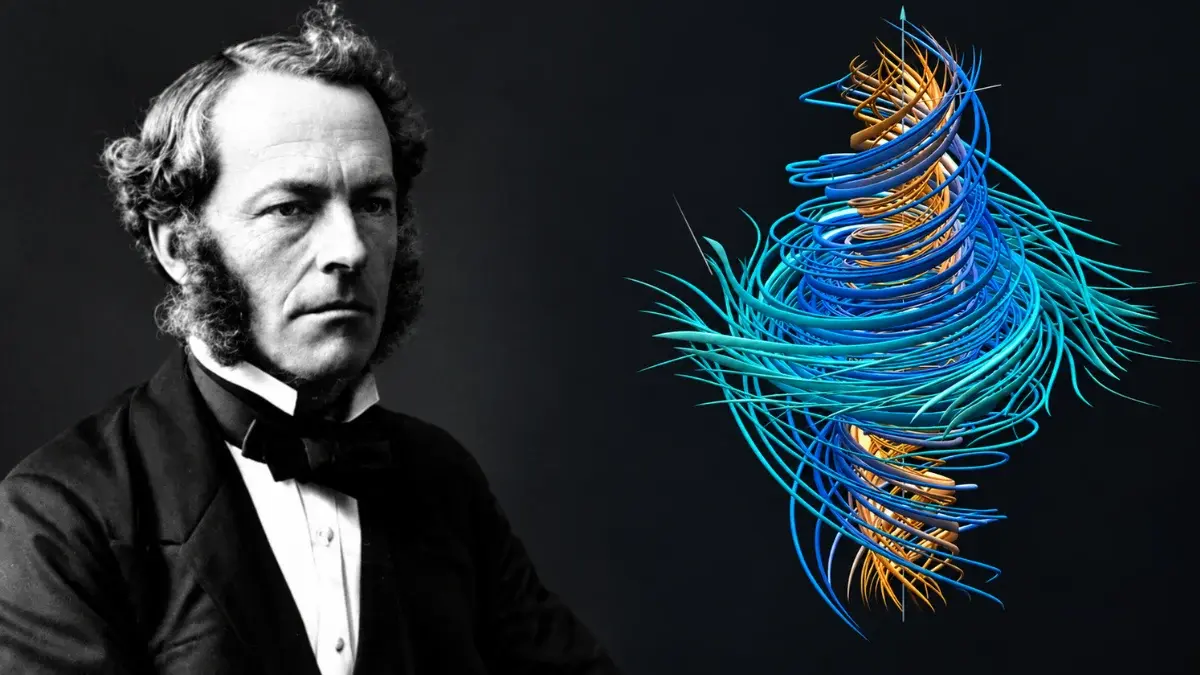
The Navier Stokes problem relates to how fluids move
OpenAI says the AI agents used an internal model to coordinate their efforts
OpenAI’s solution has attracted questions from maths professor Tristan Buckmaster
OpenAI says it has solved a 90-year-old Navier-Stokes mathematics problem in 88 hours. The advanced maths problem relates to how fluids move. OpenAI termed the solution to the Navier-Stokes problem a milestone, adding that it proves that AI tools are improving fast.
How Did OpenAI Solve the 90-year-Old Maths Problem?
OpenAI said it used 10,000 AI agents and an internal model to solve the advanced maths problem which relates to how fluids move.
“The agents had access to tools, such as the ability to read from a cached version of the internet and the ability to run code. Agents were subdivided into groups with the ability to communicate within the group. The groups varied in size, and the group that produced the Navier–Stokes resolution involved on the order of 10,000 concurrent agents. The agents arrived at their resolution on Saturday, September 5, about 88 hours after the first agents were launched,” OpenAI said in a published statement.
The Navier–Stokes problem is one of the seven Millennium Prize Problems. It is among the century’s most difficult mathematical challenges of the 21st century. For nine decades, mathematicians have struggled to prove crucial aspects of these equations, leaving critical questions about fluid behavior unresolved.
The Controversy Surrounding OpenAI’s Maths Solution
The Clay Mathematics Institute in Cambridge, which established the Millennium Prize Problems, has not confirmed OpenAI’s advanced maths AI solution. However, the issue has attracted questions from New York University professor, Tristan Buckmaster.
In a statement published hours before OpenAI released its work, Buckmaster claimed he had been working on the Navier-Stokes math problems alongside Levent Alpöge, a mathematician who works for Anthropic. The duo used Codex and several other models in their work.
Buckmaster said he discovered “information about our progress had been passed to OpenAI” on September 3. He also claimed that OpenAI’s solution resembled their work. Buckmaster’s statement included communication exchanged with OpenAI, including questions regarding its timing and method.
OpenAI, which recently launched GPT-5.6, denied interacting with any of Buckmaster’s work until it was published publicly. The AI firm said no user data had been accessed regarding the duo’s work on the Navier-Stokes problem.
What the Maths Solution Means for OpenAI
OpenAI’s solution could reshape how mathematicians approach complex problems. However, controversy raises serious questions about transparency, attribution, and trust. OpenAI’s solution also needs to be scrutinized and verified by experts in the field of mathematics to establish credibility. If verified, the solution could accelerate AI-assisted mathematical research and expand AI’s role in solving scientific challenges.

.webp&w=750&q=75 "Meta Launches Enterprise AI Unit and Taps MongoDB CEO to Head it")
.webp&w=750&q=75 "GISEC 2026: AI Agent Security Puts Identity and Human Control in Focus")
.webp&w=750&q=75 "Nvidia Releases An AI Safety Software that Restricts and Monitors Agentic Activity")