
In Focus
- OpenAI introduces reasoning-led image generation with structured visual planning
- ChatGPT Images 2.0 enables full comic creation from a single prompt
- Improved text rendering allows readable UI, posters, and infographics
- Consistency across images enhances storytelling and branding workflows
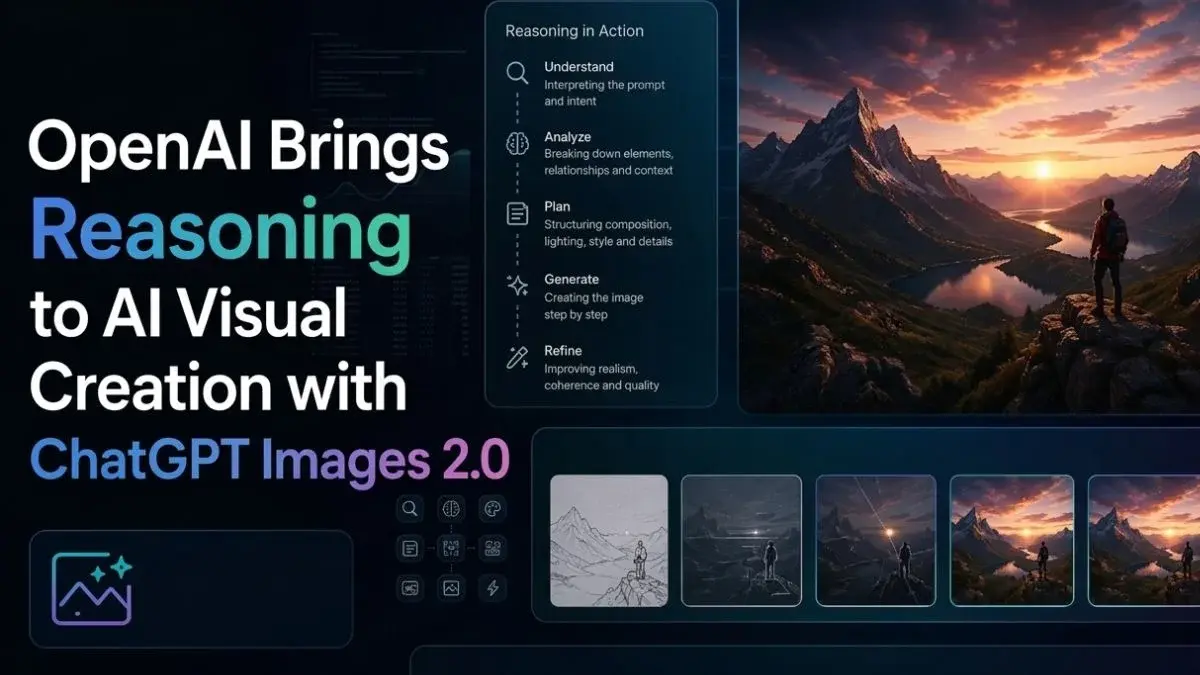
OpenAI has introduced ChatGPT Images 2.0, upgrading its image generation system with a reasoning-driven approach. The idea is that before producing an image, the model plans it, evaluating layout, spatial relationships, and object hierarchy. The result, at least in theory, is outputs that look deliberate rather than randomly assembled.
As stated in the official source, “Images are a language, not decoration. A good image does what a good sentence does—it selects, arranges, and reveals.” The update reframes visuals as structured outputs instead of static designs.
How the New Model Uses Reasoning Before Generation
The OpenAI image model 2.0 introduces a planning layer before rendering visuals. Instead of directly converting commands into images, the system evaluates relationships between objects, layouts, and spatial hierarchy. This improves clarity and reduces inconsistencies seen in earlier tools.
ChatGPT's focus on image reasoning allows outputs to resemble intentional designs rather than abstract interpretations. This approach aligns with OpenAI’s recent advancements in AI systems that combine reasoning with execution across tasks.
What's Actually New
Among the most notable features is the ability to generate multi-panel visuals with consistent characters and themes. This directly answers how ChatGPT creates comics from prompts, enabling users to produce structured narratives from a single input. The model also improves text rendering, delivering readable fonts within visuals such as posters, UI screens, and diagrams.
These capabilities build on earlier updates that expanded OpenAI’s image generation ecosystem, making outputs more aligned with real-world design and communication needs.
Consistency for Professional Work
A key advancement lies in maintaining consistency across multiple generated images. The system preserves character identity, style, and object placement across scenes, making it suitable for storyboards and branded content. This reduces reliance on iterative edits and external tools.
The shift reflects a broader move toward AI systems that can execute complex workflows, similar to recent updates in AI-assisted coding and computer-use tools. As a result, image generation is evolving into a structured, repeatable process rather than a one-off creative output.
Impact on the Design Market
The upgrade is expected to influence the design and content creation market significantly. Platforms such as Canva and Adobe Photoshop may face increased competition as AI-generated visuals become more reliable and production-ready.
The ability to create structured assets from prompts reduces manual effort and turnaround time. However, improved realism and text accuracy also raise concerns about misinformation, as highly convincing visuals can now be generated with minimal effort.
A Shift Toward Intent-Driven Visual AI
ChatGPT Images 2.0 isn't just a quality enhancement. It represents a shift in how OpenAI thinks about image generation, less a creative novelty, more a structured output system you can build workflows around. For teams already using AI in design or content production, it's worth testing against what you're currently doing.
This update also fits into OpenAI’s broader strategy of integrating reasoning across modalities, from images to code and system-level interactions.

.webp&w=750&q=75 "Meta Launches Enterprise AI Unit and Taps MongoDB CEO to Head it")
.webp&w=750&q=75 "GISEC 2026: AI Agent Security Puts Identity and Human Control in Focus")
.webp&w=750&q=75 "Nvidia Releases An AI Safety Software that Restricts and Monitors Agentic Activity")