
Related Keywords:
- U.K. plans to introduce child social media restrictions in 2027
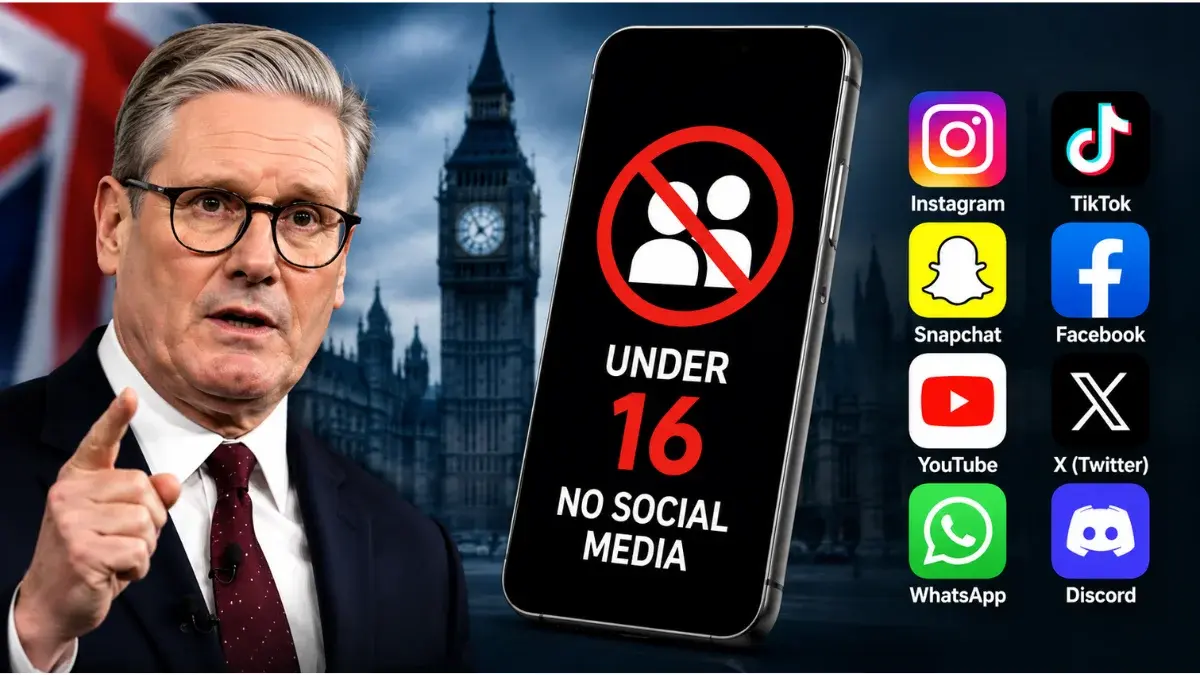
- The restrictions will limit under-16 access to Snapchat, YouTube, TikTok, and Instagram
- Restrictions will be modelled around Australia’s social media ban
British Prime Minister Keir Starmer has announced plans to ban social media for under-16 users. The U.K. social media ban for children comes at a time when calls to enhance online safety for underage users continue to rise globally. Initial rules are expected later this year with the ban set to take effect early in 2027.
Why is the U.K. Banning Social Media for Under-16s?
U.K.’s social media ban for under-16s is aimed at reducing endless scrolling for children while creating more opportunities for play, development, and social interaction. Policymakers claim that excessive use of social media exposes children to cyberbullying, harmful content, addictive algorithms, and unrealistic social pressures.
“Parents want to keep their kids safe and happy, but the online world has made that harder than ever. I’ve heard first hand from families crying out for change and we will do right by them. That’s why we’re going further than any country in the world by banning social media for under-16s and putting wider protections in place to give kids their childhood back,” Prime Minister Keir Starmer said.
Technology Secretary Liz Kendall noted that tech giants had failed to address the online child safety issue despite being accorded numerous opportunities.
“That is why we are taking power away from the tech giants and putting it back in parents’ hands,” she added.
The under-16 social media ban in the U.K. would involve restricting access to Snapchat, YouTube, TikTok, Instagram, X, and Facebook. The government said messaging apps like WhatsApp and Signal would not be affected by the ban.
How Will Child Social Media Restrictions in the U.K. Work?
The restrictions in the U.K will be modelled around Australia’s social media ban. However, the country plans to include additional restrictions to limit under-16 access to features that are considered harmful to children.
One of the restrictions is blocking under-16 communication with strangers, including live streaming. Other restrictions under consideration are overnight curfews and limitations on infinite scrolling for minors.
“We’re going further than any country in the world by banning social media for under-16s and putting wider protections in place to give kids their childhood back,” Starmer added.
The British government is exploring age-verification as a way of enforcing the under-16 ban. Ofcom is expected to undertake a rapid study to determine how best user age can be verified.
What Does the Ban Mean for Social Media Firms?
Social media firms have termed blanket bans as ineffective in guaranteeing online safety for children. They claim the restrictions will likely hinder their access to age-appropriate experiences.
For instance, YouTube said it has invested heavily in age-relevant experiences, including a mental health and wellbeing section for teens. Other social media platforms like Meta have given parents more visibility into how teens use its AI tools.
“Blanket bans push kids out of such curated, supervised, beneficial experiences and towards anonymous, less safe services,” A YouTube spokesperson noted as cited by CNBC.

.webp&w=750&q=75 "Meta Launches Enterprise AI Unit and Taps MongoDB CEO to Head it")
.webp&w=750&q=75 "GISEC 2026: AI Agent Security Puts Identity and Human Control in Focus")
.webp&w=750&q=75 "Nvidia Releases An AI Safety Software that Restricts and Monitors Agentic Activity")
.webp&w=750&q=75 "Microsoft Targets Enterprise AI With New Copilot Coding and Agent Tools")