
Introduction
Data is generated extremely fast in today’s digital world. This pace is pushing cloud computing to the edge and resulting in data processing inefficiencies. By bringing data computation and storage closer to the source, edge computing technology offers benefits like higher performance, speedy response, and scalability. With the emerging cloud computing trends, edge computing will continue to transform the digital landscape in 2024.
Here Are Top 10 Edge Computing Trends We Can Expect to See in 2024:
1. Emergence of Edge-as-a-Service
One of the critical edge computing trends that will be witnessed in 2024 is the evolution of edge computing into a service. Edge computing companies will leverage edge-as-a-service (EaaS) to scale their resources without investing in costly infrastructure. EaaS can facilitate edge-to-edge collaborations, provide edge autonomy and resource elasticity while managing a wide range of cross-node resources for users. End users can use EaaS to deploy services, intelligence, and computation from edge computing platforms with a lot of flexibility. Some of the areas where EaaS will open new possibilities for businesses in 2024 include asset recovery, predictive analysis, edge device management, and tracking, as well as software and operation automation.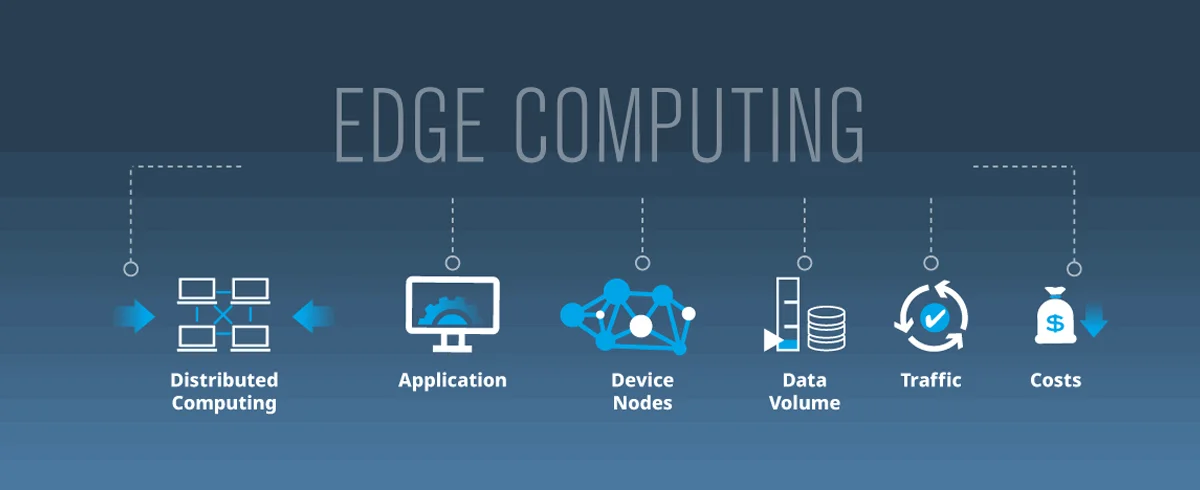
2. Rise of Cloud-Edge Integration
Edge computing improves real-time processes and reduces latency by pushing computation closer to data sources. Cloud computing offers businesses economies of scale and flexible resources by giving them access to computing services like storage, networking, analytics, and databases via the Internet. In 2024, we’ll see growing integration between edge and cloud computing to facilitate efficiency in the processing and analysis of data. Cloud and edge computing integrations will be crucial in supporting a wide range of applications including the Internet of Things (IoT), autonomous vehicles, and smart cities.3. Stronger Focus on Data Security
A report by IBM showed that in 2023, the average cost of managing a data breach stood at $4.45 million globally. With several companies planning to invest more in cybersecurity, the focus on data security for edge computing is increasing. As such, we’ll see edge computing focus more on implementing better hardware security features such as trusted platform modules to give edge devices robust security foundations. Edge computing will also be used to enhance booting security to ensure that edge devices only execute trusted firmware. To improve data security, both at rest or in transit, we’ll see improvements in encryption algorithms.4. Higher 5G Adoption
Edge computing can boost performance and offer users better digital experiences through 5G networks. 5G offers users high bandwidth, low latency, and higher data transfer speeds. Globally, 5G mobile uptake is set to hit 1.5 billion subscribers by the close of 2023. In 2024, we’ll see higher adoption of the 5G network. This adoption will lead to the emergence of new use cases for edge computing technologies that were initially restricted by connectivity limitations. Combined with edge computing, 5G networks will change the way businesses operate, enabling them to deliver new data experiences from different data centers.5. Rise in Deployment of Edge Containers
Edge containers refer to decentralized computing resources that save bandwidth, reduce latency, and improve digital experiences for users. By decentralizing computing, edge containers help companies to decentralize services by shifting critical components to the edge of a network to reduce network costs and improve response time. They also help in redistributing traffic to other containers using a single IP. As companies seek to meet customer demands, we’ll see increased deployment of edge containers in 2024.