

Introduction
For the past several months, Android users and developers have been on edge. Posts counting down the days until "Android stops being open" have been spreading across r/androiddev and r/IndiaTech. People who have been sideloading apps for years are suddenly hitting walls they did not expect. Developers are logging into Play Console to find their accounts flagged with no clear explanation.
The Keep Android Open debate is hard to avoid right now. At the centre of it is a question most users have never had to think about: what does Android open source actually mean, and does it protect the freedoms people assume it does? This piece explains what is actually changing, what was always true, and why the difference matters for anyone who uses an Android phone.
What Is Android Open Source and How Does Google Android Control Work?
When most people say Android is "open," they mean you can install apps from anywhere, customise your phone, and choose what runs on it. That experience is what is changing. But to understand why, it helps to know that "Android" is actually two different things.
Android open source refers to AOSP, the Android Open Source Project. This is a publicly available codebase that anyone can take, modify, and build their own operating system from. Amazon built Fire OS on it. Huawei relied more heavily on AOSP-based development after losing access to Google's services. That codebase remains open and has not changed.
The Android on your phone is something different. Google's Android, which runs on roughly 95% of smartphones, adds a proprietary layer on top of Android open source. That layer includes Google Mobile Services (GMS), the Play Store, Play Protect, and all the Google apps that come pre-installed. This part is not open source and never has been. Google Android control runs through this layer, not through AOSP.
Most users have never needed to think about this distinction. The Android open source reputation has always applied to the foundation, not the experience people actually live inside. The tension between Android platform freedom and Google Android control is not new. What is new is how directly users are now feeling it.
The Android Restrictions Driving the Keep Android Open Movement
Three major Android restrictions are emerging at the same time. Together, they are what is driving the keep android open movement and why so many users and developers are paying attention now.
Play Integrity API is the change most people are feeling. Google now lets apps check whether your phone has been modified in any way. If it has, the app can simply refuse to open. That means if you have sideloaded apps, unlocked your bootloader, or installed a custom version of Android, your banking app, streaming service, or workplace app may stop working entirely. Developers on r/GooglePlayDeveloper have been raising concerns about what this means for Android developer rights, while Google has provided limited clarity in response.
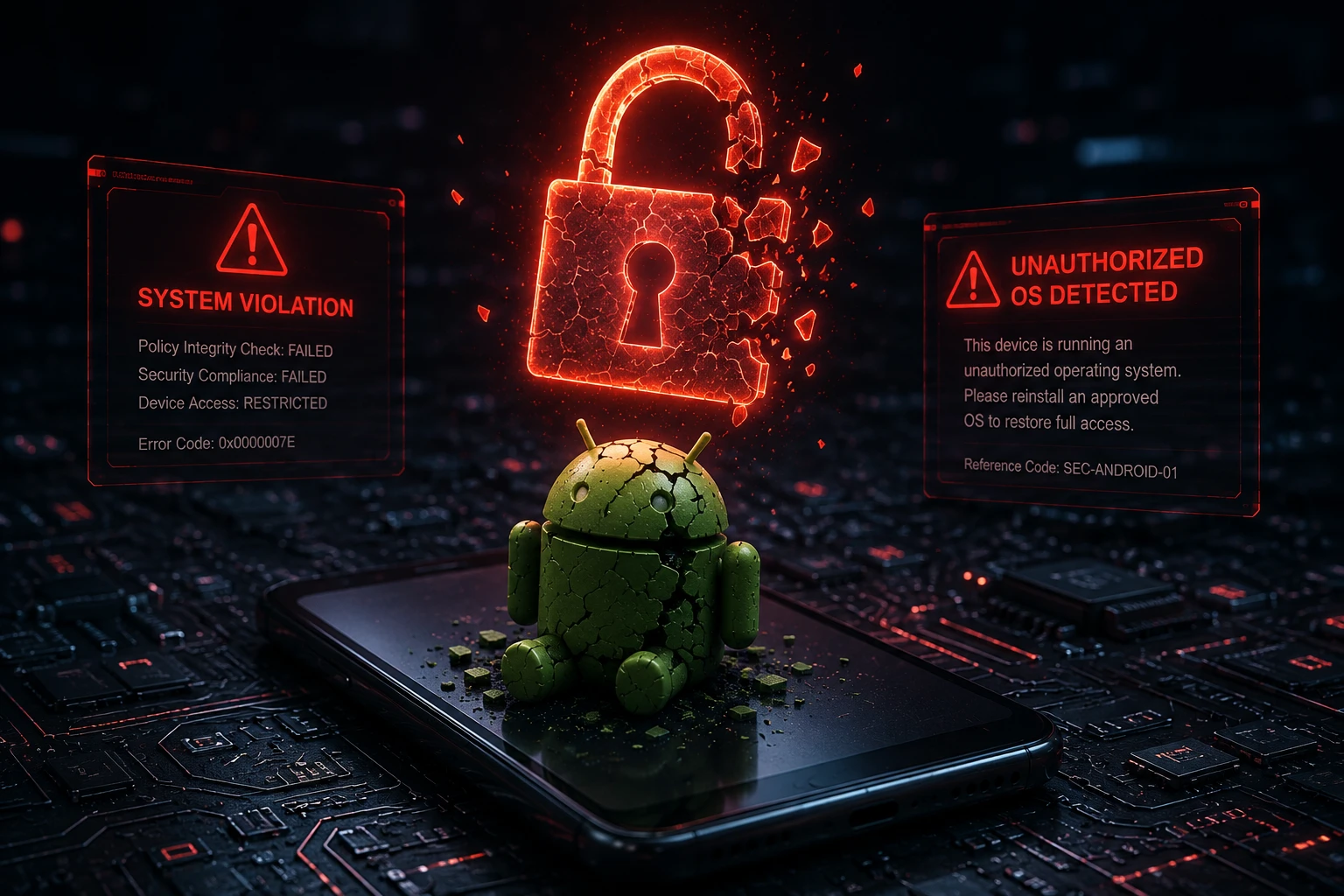
OEM restrictions are the second layer. Phone manufacturers have been quietly making it harder to unlock bootloaders or install custom versions of Android. This is largely driven by Google's Play Protect Certification program, which sets conditions manufacturers must meet to ship Google apps and the Play Store on their devices. Meeting those conditions increasingly means locking down what users can do with the hardware they bought.
App store policy enforcement is the third shift and the one hitting Android developer rights most directly. Google now requires apps that handle payments to use its billing system and pay a 30% commission. Developer account suspensions have gone up, and the enforcement feels inconsistent. For independent developers and small studios, the financial pressure and account uncertainty are adding up.
How These Android Restrictions Affect Users, Developer Rights, and the Industry
The same changes hit differently depending on where you sit.
1. For users, the impact is immediate and practical. Sideloading an app, something millions of people do to access apps not available in their region or to install an older version of something, is getting harder. More apps are using Play Integrity checks to block installs from outside the Play Store. Banking and finance apps are among the most aggressive. Users who have unlocked their phones or installed custom software are finding that apps they used every day simply refuse to run. As r/degoogle users have noted, Android platform freedom as most people understand is narrowing fast.
2. For developers, the situation is harder to navigate. Play Integrity forces a decision: enforce checks strictly and lose users on modified devices or apply them selectively and risk policy violations. Account suspensions have become more frequent and often arrive without a clear reason, leaving developers unsure what they did wrong or how to fix it. Android developer rights are increasingly defined by Google's rules rather than the Android open source promise.
3. For the broader industry, the pressure is coming from regulators. The EU's Digital Markets Act has already forced Google to allow alternative app stores in Europe, directly challenging Google Android control over how apps reach users. The Competition Commission of India (CCI) has flagged Android's market dominance as an antitrust concern. The U.S. Department of Justice is scrutinizing Google on multiple fronts. The argument Google once made, that Android was meaningfully more open than Apple's iOS, is getting harder to sustain.
Keep Android Open: What Is Genuinely New and What Was Always True
Google Android control over the experience most people use is not new. Google has always set the terms for phone manufacturers that want to ship its services. The Play Store has always been the primary channel. Play Protect compliance has always been required. None of that is recent.
What is genuinely new is that the enforcement is now consistent and difficult to work around. A few years ago, these rules existed but could often be worked around. Sideloading was a settings toggle away. Custom ROMs were inconvenient but possible. The Play Integrity API changes that. It is not a new rule. It is a new mechanism that makes the existing rules automatic and much harder to bypass.
For most users, the open Android they thought they had was always the Android open source foundation, not the Google-controlled experience built on top of it. That gap has always been there. What has changed is that it is wider, more visible, and now affecting people who never considered themselves power users at all.
The Future of Android Openness: What Happens Next and What to Watch
The Keep Android Open movement is really a fight over a simpler question: who owns the phone in your pocket? App store fees and bootloader policies are part of a much larger struggle over control. The underlying question is whether users and developers get to decide what runs on Android hardware, or whether Google does.
Google's argument is that these controls keep users safe from malware and fraud. That is not an unreasonable position, and app security increasingly depends on knowing the integrity of the device underneath. But the Play Integrity system currently makes no distinction between a phone compromised by malware and a phone deliberately customised by its owner. Both fail the same checks. That is the gap most people in this debate are pointing at.
The future of Android openness will depend more on regulatory outcomes than on anything Google decides internally. The EU's DMA is already in force. India's antitrust proceedings have produced licensing changes. US DOJ scrutiny is ongoing. The signals worth watching over the next 12 to 18 months are whether alternative app stores in Europe gain real adoption, whether Google updates Play Integrity to treat user-modified devices differently from compromised ones, and whether OEMs start pushing back on certification requirements that restrict user choice.
The fight is not resolved. It is, at least, now in the open.
FAQ
1. What is Android Open Source and why does it matter?
Android open source refers to AOSP, the publicly available codebase that forms the foundation of Android. While AOSP remains open, the Google-controlled layer on top of it, which includes the Play Store and Google apps, is proprietary and is where most restrictions on users and developers are applied.
2. What does "Keep Android Open" actually mean?
Keep Android Open is the pushback against Google policies reducing the practical freedom Android users and developers have traditionally had, including sideloading apps, unlocking bootloaders, and distributing outside the Play Store. The Android open source foundation has not changed, but the experience most people use is governed by proprietary rules that are getting stricter.
3. What is the Play Integrity API and why does it matter?
The Play Integrity API lets apps check if your phone has been modified and block themselves if it has. If you sideload apps or use a customised version of Android, apps like your banking or streaming app may simply stop opening.
4. Will my sideloaded apps stop working?
It depends on whether those apps have implemented Play Integrity checks. Banking, finance, and enterprise apps are enforcing this most aggressively right now, and more apps are expected to follow. If your phone has been modified in any way, you may start seeing apps refuse to run.
5. How do Android restrictions affect developers?
Developers face pressure on billing compliance, Play Integrity enforcement decisions, and account suspensions that often come without explanation. Together these are reshaping what Android developer rights mean in practice, with Google Android control taking precedence over the Android open source promise.
6. What role does regulation play in the Keep Android Open debate?
The EU's Digital Markets Act, India's antitrust proceedings, and US DOJ scrutiny are all applying pressure on Google Android control. Regulatory outcomes are likely to shape the future of Android openness more than any internal Google policy decision.