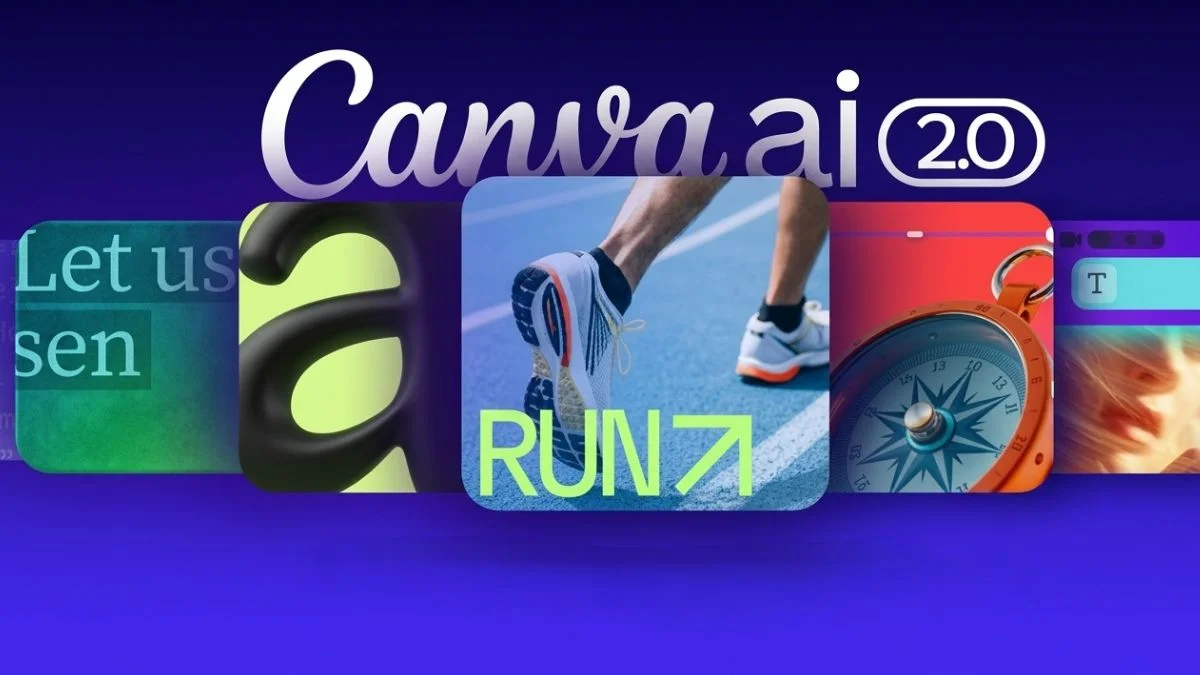
How Canva AI 2.0 Shifted From Prompt Tool to Autonomous Design Engine
In Focus
- Canva AI 2.0 now supports tool-calling for automated design workflows
- Shift from prompt-based design creation to an agentic execution model
- AI can coordinate multiple internal tools for complete design outputs
- Feature aims to reduce manual steps in the creative production process
Canva has introduced a major upgrade to its AI system, referred to as Canva AI 2.0. The update shifts the platform beyond prompt-based design creation into a tool-calling system capable of executing multi-step workflows.
Instead of generating isolated outputs, the assistant can now coordinate internal tools to complete full design tasks. This development positions Canva AI 2.0 as a more autonomous system focused on AI workflow execution rather than simple content generation.
How Canva AI 2.0 Handles Full Design Workflows
The core feature of Canva AI 2.0 is its ability to call multiple design tools from within the platform. As outlined in the TechCrunch report, the assistant can decide which tool is required, execute it, and combine results across steps. This reduces the need for users to manually adjust outputs at each stage.
The system can generate layouts, refine formatting, and prepare export-ready assets in a single flow. This approach marks a shift away from prompt-based design creation toward structured task execution driven by intent.
From Chatbot to Creative Co-Pilot
Canva describes the tool as an integrated creative partner working directly inside the editor. The assistant supports documents, presentations, and social media assets within a unified interface. With Canva AI 2.0, users can request complex outputs such as multi-format campaigns, and the system handles sequencing automatically.
This agentic AI workflow for graphic design reduces friction between idea generation and final output. It also allows iterative refinement, where users can modify outputs conversationally without restarting the process.
Beyond Canva AI 2.0, the company has also been expanding its AI capabilities through acquisitions, including MangoAI and Cavalry AI. These acquisitions support Canva’s expansion into AI-driven video creation and advanced motion graphics capabilities.
Where Creative Software Is Heading
The upgrade reflects a broader industry transition from standalone AI tools to embedded execution systems. Canva AI 2.0 integrates automation into the design environment rather than functioning as a separate chatbot layer. This enhances productivity by reducing repetitive manual steps in production workflows.
While traditional design platforms rely on user-controlled actions, Canva now enables AI-driven coordination across multiple tools. The shift strengthens its position in competitive creative software markets where speed and adaptability are key differentiators.
A comparative analysis of Canva vs Adobe design tools suggests that both platforms are increasingly converging on AI-assisted workflows, but differ in execution depth and ecosystem integration. Canva’s emphasis on simplified, template-driven automation contrasts with Adobe’s professional-grade suite complexity.
What This Means for Your Design Team
The rollout of Canva AI 2.0 signals a clear move toward automated creative production systems. By combining tool-calling capabilities with integrated editing functions, Canva is reducing dependence on manual workflow steps.
This evolution of Canva’s AI for workflow design is expected to transform how individuals and teams approach content creation. As prompt-based design creation gives way to agentic systems, Canva AI 2.0 could redefine expectations for speed, consistency, and scalability in digital design production.